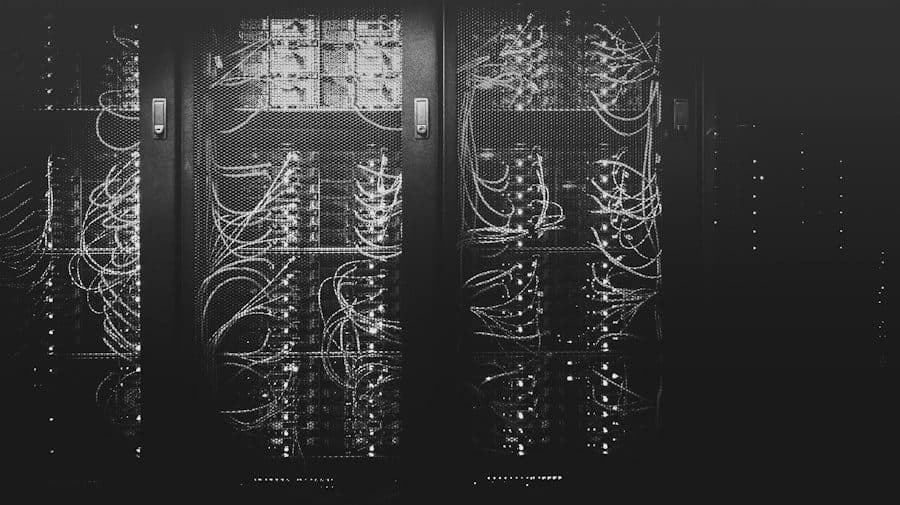
Mission control: turning data exhaust into decisions
Most organisations already record everything they need to run better — in logs, tickets, and CRM timestamps. What they lack is a surface that turns those records into thresholds, owners, and actions. Notes from building that surface.
The exhaust is already there
Every operation produces a second product it rarely uses. A brokerage answering enquiries leaves behind timestamps, channel labels, and the interval between a lead arriving and a person replying. A support desk leaves ticket ages, reassignment counts, and the phrases customers repeat before they escalate. None of this was designed as management information. It is exhaust — the by-product of doing the work — and it is usually more honest than anything in the monthly report.
The honesty matters. Self-reported numbers drift towards what people want to be true. Exhaust does not. When we pulled six months of enquiry logs for one client, the reported average first response was 'under an hour'. The logs said four hours on weekdays and eleven on weekends. Nobody had lied. The hour figure came from the leads people remembered answering, which were the ones they answered quickly.
A dashboard is not a decision
Most organisations respond to this by buying a BI tool and building dashboards. Six months later the dashboards are wallpaper. The failure is structural: a chart describes the past, but nobody is on the hook to act when it moves. A mission-control surface is different in one specific way. Every number on it has a threshold, and every threshold has a consequence — a queue entry, an escalation, a page to a named person.
In practice this looks mundane. First response over ninety seconds for a high-intent lead: the lead is re-routed and the team lead is notified. A compliance agent's error rate above one per cent for an hour: the agent is paused and a human reviews its last fifty actions. Queue age past a day in a revenue-recovery pipeline: the case surfaces at the top of the next morning's stand-up. The screen exists to trigger the hand-off, not to be admired.
Owners, trails, and uptime
Every signal on the console needs a name against it — a person, not a team. When a metric belongs to 'operations', it belongs to nobody. We ask clients to write the owner into the tile itself, next to the number. It feels bureaucratic until the first incident, when the question of who is looking at this has an answer before it is asked.
The trail matters as much as the tile. When agents act on the organisation's behalf — drafting quotes, routing cases, pausing accounts — each action should carry its inputs, its reasoning, and a timestamp, in a log that cannot be quietly edited. For one public revenue authority this was not a nice-to-have; it was the condition of deployment. An officer can pull any recommendation from months ago and see exactly why the system made it.
Uptime discipline applies to the console itself. A mission-control surface that goes dark during an incident is worse than no surface, because people have stopped keeping the old manual habits. Treat it as production infrastructure: monitored, on an uptime target, with a stated degraded mode — even if that mode is a phone tree printed on paper.
Procurement and what to build first
Buyers, especially public ones, should ask two questions before any of this is commissioned. First, who owns the system after handover — the code, the data, the logs, the thresholds. If the answer involves a per-seat licence and an export fee, the exhaust has just been sold back to you. Second, what happens when the vendor leaves. A mission-control build at XRISE ends with the client's engineers running the deployment and holding the keys; anything less is rental, not ownership.
Start with one number that already hurts. For a sales operation that is usually first response time; for a service desk, queue age; for a recovery team, value stuck in unworked cases. Wire that single signal end to end — source, threshold, owner, action, log — before adding a second. A console with one honest, acted-upon number changes behaviour. A console with forty ignored ones changes nothing, and costs more.